
Brown Family Tree - Person Sheet
Brown Family Tree - Person Sheet
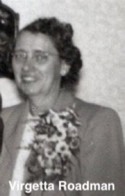
NameVirgetta Elizabeth Roadman 
 , F
, F
, FBirth Date13 Apr 1903
Birth PlaceAlverton, PA
Death Date18 Apr 1997 Age: 94
Death PlaceYoungwood, PA
FatherBert Roadman , M (1874-1918)
MotherElizabeth LevSana Barnhart , F (1871-1928)
Spouses
1John Tracey O’Keane , M
, MBirth Date6 Oct 1899
Birth PlaceGrapeville, PA
Death Date17 Apr 1933 Age: 33
Death PlaceGreensburg, PA
Burial Date19 Apr 1933
Burial PlaceBush Creek Cemetary
OccupationPresser at a glass factory
FatherWilliam J. O’Keane , M (1874-1940)
MotherLaura Idella McIntyre , F (1872-1955)
Marr Date15 Jan 1923
Marr PlaceWellsburg, Brooke, WV
ChildrenJohn Tracy "Jack" , M (1923-1986)
Russell Roland , M (1932-1992)
Loris , F (1925-2021)
Virgetta Vivian , F (1927-2023)

Birth Date17 Jul 1903
Death DateJun 1974 Age: 70
Death PlaceYoungwood, PA
OccupationTruck driver, General Hauling Co.
FatherCharles F. Harrold , M
MotherDaisy Rumbaugh , F
Marr Date16 Jul 1943
Marr PlaceWinchester, VA
ChildrenDavid Allan , M (1944-)
Notes for Virgetta Elizabeth Roadman
The 1910 United States Federal Census entry for Birgetta Roadman provides a snapshot of her life as a seven-year-old girl residing in North Huntingdon, Westmoreland County, Pennsylvania. Born in 1903 in Pennsylvania, Birgetta is listed as the daughter of Birt and Elizabeth Roadman. The Roadman household includes six members, with Birgetta having two sisters and one brother. The census indicates that Birgetta attended school, reflecting the value placed on education within her family and community.
This record situates Birgetta within the broader context of early 20th-century American life, where census data helped track demographic changes and community structures. Understanding her family's composition and educational engagement offers insights into the social priorities and living conditions of families in Pennsylvania during this period.
The 1920 United States Federal Census records Virgotta Roadman, a 16-year-old girl residing in Hempfield, Westmoreland, Pennsylvania. She lived on New Alexandria Road with her mother, Elisabeth Roadman, and sister, Winona Roadman. The census indicates that Virgotta was single and identified as white. She was born in Pennsylvania, as were her parents. Despite her youth, Virgotta did not attend school, but she was literate, able to read and write, and spoke English.
This census entry provides a snapshot of a family's life in post-World War I America, a time when industrialization and urban migration were shaping communities. It highlights the importance of census data in understanding demographic shifts and family structures during the early 20th century.
The 1930 United States Federal Census record for Virgetta O Keane provides a snapshot of her life at that time. Born around 1904 in Pennsylvania, she was a 26-year-old homemaker living in Hempfield, Westmoreland County, Pennsylvania, with her husband John O Keane and their three young children. The household was composed of five members, reflecting a typical family structure of the era. This record situates Virgetta within the broader historical context of early 20th-century American family life, highlighting her role as a wife and mother during a period of economic growth and social change in the United States.
Virgetta's life is further illustrated by her personal history: born on April 13, 1903, in Alverton, Pennsylvania, she married John O Keane on January 15, 1923, in Brooke, West Virginia. Her life journey, from birth to marriage and family life in Pennsylvania, underscores common patterns of migration and settlement within the United States during this period. The census record not only highlights household composition but also reflects societal norms and expectations for women, such as the emphasis on homemaking roles, during the interwar years.
The 1940 United States Federal Census record for Virgetta O'Keane provides a snapshot of her life in Hempfield, Westmoreland County, Pennsylvania. At age 36, Virgetta is listed as the head of her household and identified as a widow. She was born in Pennsylvania around 1904 and lived in a rented home valued at $12.50 per month. The census lists her race as white and notes that she completed the eighth grade. Virgetta did not attend school during the census year.
The census record also includes her four children: John, age 16; Loris, age 14; Virgetta, age 12; and Roland, age 8. This document illustrates the composition and socioeconomic status of the O'Keane household during the late Great Depression. It connects their experience to broader themes of family structure and economic challenges faced by many American households during this period.
The 1950 United States Federal Census records Virgette Harrold as a 47-year-old woman residing in Hempfield, Westmoreland, Pennsylvania. She was listed as the wife of C. Walter Harrold, and their household included a foster son, Russell R. O'Keane, and a son, David A. Harrold. Virgette was born in Pennsylvania around 1903, identified as white, and her occupation was recorded as "keeping house." This snapshot offers insights into post-World War II domestic life and family structures in mid-20th century America, reflecting broader societal roles and expectations of women at that time.
Virgette's life is further contextualized by her birth in Alverton, Pennsylvania, on April 13, 1903, and her death in Youngwood, Pennsylvania, on April 18, 1997. Her marriage to C. Walter Harrold took place in Brooke, West Virginia, on January 15, 1923. These details situate Virgette within the social and geographical fabric of Pennsylvania throughout her life, highlighting migration patterns and marriage practices in the early 20th century.
This record situates Birgetta within the broader context of early 20th-century American life, where census data helped track demographic changes and community structures. Understanding her family's composition and educational engagement offers insights into the social priorities and living conditions of families in Pennsylvania during this period.
The 1920 United States Federal Census records Virgotta Roadman, a 16-year-old girl residing in Hempfield, Westmoreland, Pennsylvania. She lived on New Alexandria Road with her mother, Elisabeth Roadman, and sister, Winona Roadman. The census indicates that Virgotta was single and identified as white. She was born in Pennsylvania, as were her parents. Despite her youth, Virgotta did not attend school, but she was literate, able to read and write, and spoke English.
This census entry provides a snapshot of a family's life in post-World War I America, a time when industrialization and urban migration were shaping communities. It highlights the importance of census data in understanding demographic shifts and family structures during the early 20th century.
The 1930 United States Federal Census record for Virgetta O Keane provides a snapshot of her life at that time. Born around 1904 in Pennsylvania, she was a 26-year-old homemaker living in Hempfield, Westmoreland County, Pennsylvania, with her husband John O Keane and their three young children. The household was composed of five members, reflecting a typical family structure of the era. This record situates Virgetta within the broader historical context of early 20th-century American family life, highlighting her role as a wife and mother during a period of economic growth and social change in the United States.
Virgetta's life is further illustrated by her personal history: born on April 13, 1903, in Alverton, Pennsylvania, she married John O Keane on January 15, 1923, in Brooke, West Virginia. Her life journey, from birth to marriage and family life in Pennsylvania, underscores common patterns of migration and settlement within the United States during this period. The census record not only highlights household composition but also reflects societal norms and expectations for women, such as the emphasis on homemaking roles, during the interwar years.
The 1940 United States Federal Census record for Virgetta O'Keane provides a snapshot of her life in Hempfield, Westmoreland County, Pennsylvania. At age 36, Virgetta is listed as the head of her household and identified as a widow. She was born in Pennsylvania around 1904 and lived in a rented home valued at $12.50 per month. The census lists her race as white and notes that she completed the eighth grade. Virgetta did not attend school during the census year.
The census record also includes her four children: John, age 16; Loris, age 14; Virgetta, age 12; and Roland, age 8. This document illustrates the composition and socioeconomic status of the O'Keane household during the late Great Depression. It connects their experience to broader themes of family structure and economic challenges faced by many American households during this period.
The 1950 United States Federal Census records Virgette Harrold as a 47-year-old woman residing in Hempfield, Westmoreland, Pennsylvania. She was listed as the wife of C. Walter Harrold, and their household included a foster son, Russell R. O'Keane, and a son, David A. Harrold. Virgette was born in Pennsylvania around 1903, identified as white, and her occupation was recorded as "keeping house." This snapshot offers insights into post-World War II domestic life and family structures in mid-20th century America, reflecting broader societal roles and expectations of women at that time.
Virgette's life is further contextualized by her birth in Alverton, Pennsylvania, on April 13, 1903, and her death in Youngwood, Pennsylvania, on April 18, 1997. Her marriage to C. Walter Harrold took place in Brooke, West Virginia, on January 15, 1923. These details situate Virgette within the social and geographical fabric of Pennsylvania throughout her life, highlighting migration patterns and marriage practices in the early 20th century.
Notes for John Tracey (Spouse 1)
The 1930 United States Federal Census records John O'Keane living in Hempfield, Westmoreland County, Pennsylvania. At the age of 29, John was the head of a household that included his wife, Virgetta, and their three children. Born in Pennsylvania around 1901, John worked as a presser at a glass factory, highlighting the region's industrial economy during that time. His household rented their home on Fifth Street, indicating typical living arrangements for working-class families during the Great Depression.
This census entry not only provides a snapshot of John O'Keane's family life but also reflects broader social and economic patterns in the United States during the 1930s. It illustrates the dynamics of employment in industrial sectors and housing conditions, offering insight into how families navigated economic challenges during this era.
This census entry not only provides a snapshot of John O'Keane's family life but also reflects broader social and economic patterns in the United States during the 1930s. It illustrates the dynamics of employment in industrial sectors and housing conditions, offering insight into how families navigated economic challenges during this era.
Notes for Charles Walter (Spouse 2)
The 1910 United States Federal Census record for Walter Harrold shows him as a six-year-old boy living in Hempfield, Westmoreland County, Pennsylvania. Born in 1904 in Pennsylvania, Walter is listed as the son of Charles F. Harrold and Daisy Harrold. The household also includes his younger sister, Vernell. The census provides a snapshot of Walter’s early life, indicating he attended school, and it places his family within the broader context of early 20th-century American rural communities. This record is part of the larger framework of U.S. censuses that document population growth, migration, and household composition during a period of significant social and economic change.
The 1920 United States Federal Census record for Walter C. Harrold provides a snapshot of his life at age 16, living in Hempfield, Westmoreland, Pennsylvania. He is recorded as the son of Charles F. Harrold and Daisy Harrold, with siblings Vernell M., Luella, and Earl E. Harrold. Walter was single, able to read and write, and attended school, reflecting the educational priorities of the early 20th century. This record situates him within the broader context of family life in rural Pennsylvania during a time of post-World War I adjustment and societal change in America.
Walter Harrold, born in Pennsylvania around 1904, was part of a household where both parents were also Pennsylvania natives. The census details the family's residence and their engagement with local community life. As a young man in the 1920s, Walter's life was shaped by the educational and social expectations of the time, illustrating the period's emphasis on literacy and schooling amidst the evolving economic and social landscape of the United States.
The 1930 United States Federal Census record for Charles W Harold provides insight into his life at that time. Born around 1904 in Pennsylvania, Charles was 26 years old and living in Whitpain, Montgomery, Pennsylvania. He was recorded as single, living in his parents' household. His occupation was listed as a chauffeur for a private family, indicating his role in the local economy as a wage or salary worker. Both of his parents were born in England, which reflects the immigrant background that shaped his family.
This census record not only details Charles's personal and familial circumstances but also reflects broader patterns of employment and family structure during the early 20th century in the United States. The document adds to an understanding of how individuals like Charles contributed to and were shaped by the social and economic environments of their time.
The 1940 United States Federal Census records Walter Harrald as a 36-year-old single male living in Hempfield, Westmoreland, Pennsylvania. He was born around 1904 in Pennsylvania and worked as a trucker at the time of the census. Walter lived with his parents, Charles and Daisy Harrald, and three siblings. The record provides insight into family and economic life during the 1940s in Pennsylvania. Walter's occupation as a trucker and his status as an unpaid family worker highlight the family's economic dynamics during a period marked by the tail end of the Great Depression and the onset of World War II. The census serves as a snapshot of individual and family roles within the broader societal changes of the time.
The 1950 United States Federal Census lists C Walter Harrold as the head of his household in Hempfield, Westmoreland, Pennsylvania. At the age of 46, he lived with his wife, Virgette Harrold, foster son Russell R O'Keane, and son David A Harrold. His occupation was noted as a truck driver for the General Hauling Co., and he worked 48 hours a week. This record provides insight into post-war American life, reflecting economic stability and the prevalence of traditional family structures during this period.
The 1920 United States Federal Census record for Walter C. Harrold provides a snapshot of his life at age 16, living in Hempfield, Westmoreland, Pennsylvania. He is recorded as the son of Charles F. Harrold and Daisy Harrold, with siblings Vernell M., Luella, and Earl E. Harrold. Walter was single, able to read and write, and attended school, reflecting the educational priorities of the early 20th century. This record situates him within the broader context of family life in rural Pennsylvania during a time of post-World War I adjustment and societal change in America.
Walter Harrold, born in Pennsylvania around 1904, was part of a household where both parents were also Pennsylvania natives. The census details the family's residence and their engagement with local community life. As a young man in the 1920s, Walter's life was shaped by the educational and social expectations of the time, illustrating the period's emphasis on literacy and schooling amidst the evolving economic and social landscape of the United States.
The 1930 United States Federal Census record for Charles W Harold provides insight into his life at that time. Born around 1904 in Pennsylvania, Charles was 26 years old and living in Whitpain, Montgomery, Pennsylvania. He was recorded as single, living in his parents' household. His occupation was listed as a chauffeur for a private family, indicating his role in the local economy as a wage or salary worker. Both of his parents were born in England, which reflects the immigrant background that shaped his family.
This census record not only details Charles's personal and familial circumstances but also reflects broader patterns of employment and family structure during the early 20th century in the United States. The document adds to an understanding of how individuals like Charles contributed to and were shaped by the social and economic environments of their time.
The 1940 United States Federal Census records Walter Harrald as a 36-year-old single male living in Hempfield, Westmoreland, Pennsylvania. He was born around 1904 in Pennsylvania and worked as a trucker at the time of the census. Walter lived with his parents, Charles and Daisy Harrald, and three siblings. The record provides insight into family and economic life during the 1940s in Pennsylvania. Walter's occupation as a trucker and his status as an unpaid family worker highlight the family's economic dynamics during a period marked by the tail end of the Great Depression and the onset of World War II. The census serves as a snapshot of individual and family roles within the broader societal changes of the time.
The 1950 United States Federal Census lists C Walter Harrold as the head of his household in Hempfield, Westmoreland, Pennsylvania. At the age of 46, he lived with his wife, Virgette Harrold, foster son Russell R O'Keane, and son David A Harrold. His occupation was noted as a truck driver for the General Hauling Co., and he worked 48 hours a week. This record provides insight into post-war American life, reflecting economic stability and the prevalence of traditional family structures during this period.